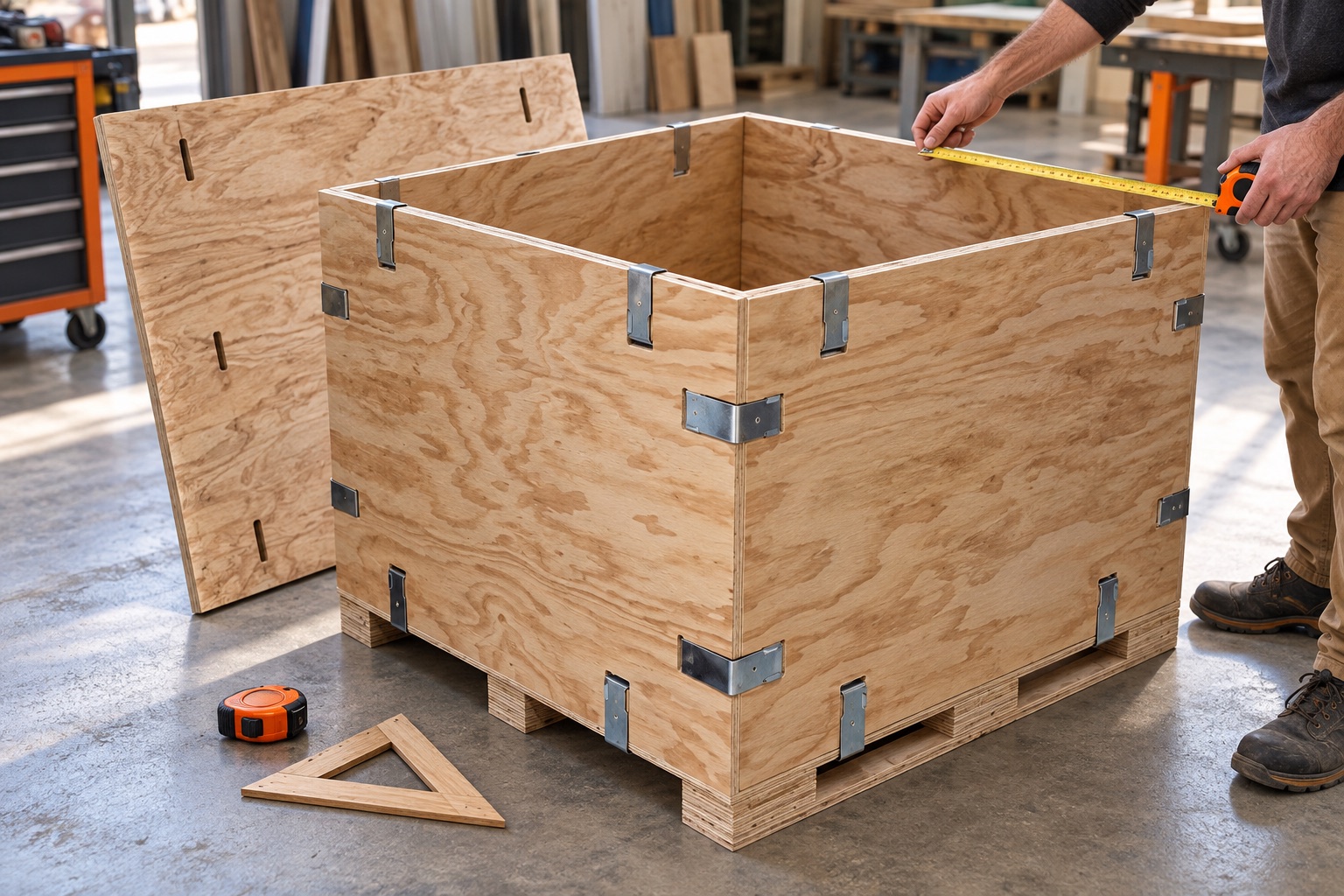
A reusable crate works best when the people at both ends of a shipment know what to do with it. CNC Orlando's collapsible crates use a clip system designed for assembly and disassembly without tools. Planning the unpacking and return routine is how you make that feature useful beyond the first delivery.
Start with the assembly demonstration
Watch the assembly video before your first use and share it with the person who will receive the shipment. It is much easier to understand the relationship between the panels and clips when you can see the actual system working. The product builder's exploded view is also useful for seeing the arrangement of the panels.
Before packing, lay out the supplied components in a clear work area. Check that the panels and hardware are present and in usable condition. Follow the demonstration and any instructions supplied with your crate; if a component seems damaged or does not align as expected, ask the team before putting it into service.
Give the receiver a simple plan
Do not assume a first-time recipient knows that the crate is intended to be kept. Include a short unpacking note with the shipment explaining which parts should be retained and what happens after the contents are removed. If several departments will handle it, identify the person responsible for the empty crate.
- Share the assembly reference with the receiving contact.
- Identify any packing materials that belong to the reusable kit.
- Ask the receiver to keep the clips together during unpacking.
- Explain whether the empty crate will be stored locally or returned.
- Include a contact for questions about the crate and its contents.
Store a complete kit between uses
The collapsible design allows the panels to be stored flat. Choose a designated storage location and keep each crate's components together so the next packing job does not begin with a search for hardware. A labeled container for small parts can be more useful than a loose pile of clips on a shelf.
For a fleet of crates, give each kit an internal reference and maintain a simple parts record. A photograph of the complete kit can help a different team member recognize what should be present when the crate comes back.
Review condition before the next trip
Reusability is a reason to maintain the crate, not a reason to skip checking it. Look over the panels, connection areas and hardware after a return. Set aside damaged components and ask about the appropriate next step. Keep notes on missing parts or problems encountered by the receiving team.
It is also worth comparing your actual return, storage and handling costs over time. The value of reuse depends on how your operation manages the complete shipping cycle.
Browse CNC Orlando crates, or explore the custom crate's clip system in 3D and build a size around your next project.
Related guide: Plan a reusable crate kit for events and repeat shipments.